
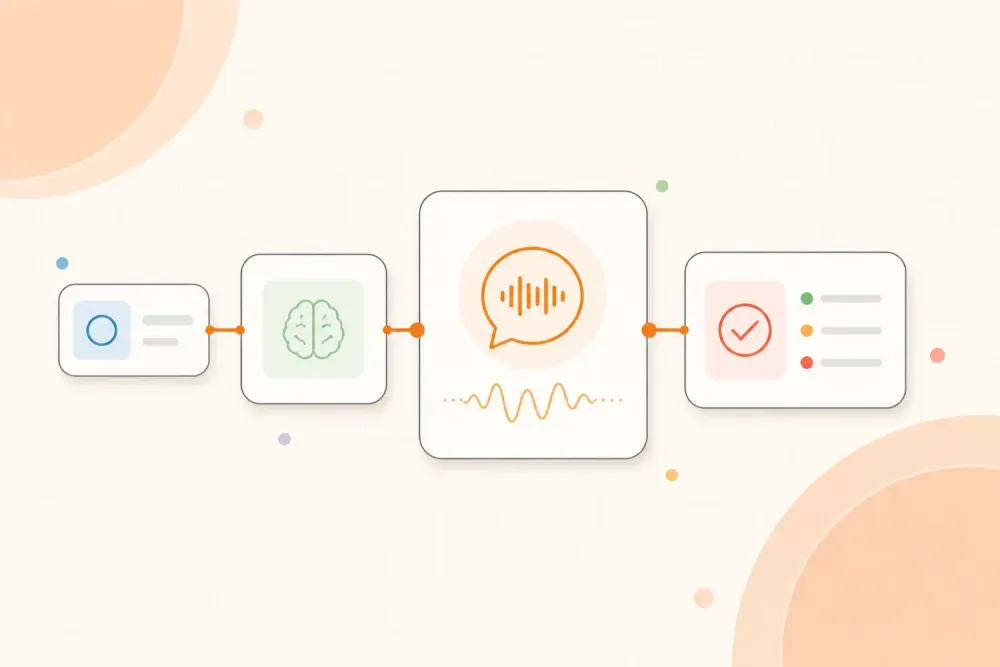
An oral exam is not a written exam read aloud. You need to know the material, but you also need to retrieve it in real time, organize an answer while speaking, and respond when the examiner changes direction. The most useful preparation therefore has two tracks: learn the content, then rehearse the conversation.
This guide shows you how to prepare for an oral exam without memorizing a script. You will learn how to read the assessment criteria, build answer structures, practice follow-up questions, use pauses productively, and turn each mock answer into a specific next task.
How to prepare for an oral exam
Before you revise, identify what the format asks you to demonstrate. An oral exam may assess several things at once:
- Knowledge: Can you state accurate facts, definitions, principles, or examples?
- Understanding: Can you explain why something happens rather than only name it?
- Application: Can you use the idea in a new case, problem, or scenario?
- Judgment: Can you compare options, defend a position, or acknowledge limits?
- Communication: Can you make a clear answer understandable under time pressure?
The balance depends on the course. A language oral may prioritize fluency and interaction. A viva may probe your methods, evidence, and decisions. A clinical or professional assessment may add safety, empathy, or scenario handling. Do not prepare for an imaginary version of the exam. Prepare for the tasks your examiner can actually ask you to perform.
The format should determine the balance of your preparation. If the rubric rewards analysis, spend more time defending claims and handling follow-ups. If it rewards fluency, add timed speaking and interaction practice. If it rewards technical accuracy, keep a precise question bank and verify the terms you use.
Check the format and marking criteria first
Find the assessment brief, rubric, syllabus, or instructions from your instructor. Write down:
- How long the exam lasts and whether there is preparation time.
- Whether questions are given in advance or selected during the exam.
- Whether you can use notes, a diagram, a calculator, or other material.
- Whether the examiner expects definitions, explanations, analysis, demonstrations, or discussion.
- Which criteria separate a satisfactory answer from a high-scoring one.
These details change your study method. If you receive questions in advance, prepare a clear route through each answer and practice adapting it to follow-ups. If the questions are unseen, build a question bank by topic and practice starting from random prompts. If a rubric rewards evidence and evaluation, a list of definitions will not be enough.
The Monash guide to preparing for an oral assessment makes the same practical point: understand the task and criteria before choosing how to revise, then rehearse the spoken performance itself.
Build a speaking outline, not a script
Full scripts often sound unnatural and break when the examiner asks a question in a different way. Build a compact outline instead. For each major topic, keep four elements:
- Opening answer: State the main idea in one or two sentences.
- Support: Give the reason, evidence, example, or steps that justify it.
- Qualification: Add a condition, limitation, comparison, or alternative when it matters.
- Close: Return to the question and state the conclusion clearly.
For example, an answer to “Why did this policy fail?” might follow this route:
Main claim -> two causes -> evidence for each cause -> limitation or counterargument -> conclusion
This structure gives you direction without forcing you to recite exact wording. Write keywords, not paragraphs. If your notes contain a complete answer, cover them and explain the topic aloud from the keyword route.
Turn your notes into spoken questions
Do not practice by reading a list of topics and thinking, “I know that.” Convert each topic into a question that requires a spoken answer. Mix prompt types:
| Prompt type | What it makes you do |
|---|---|
| Define | State the precise meaning and boundary of a term |
| Explain | Connect a cause, mechanism, or sequence to its result |
| Compare | Choose a useful basis and show a meaningful difference |
| Apply | Transfer the idea to a new example or condition |
| Defend | Make a claim and support it with evidence |
| Reflect | Explain a choice, method, limitation, or improvement |
Keep the prompts specific. “Tell me about photosynthesis” is too broad to diagnose. “Why does light intensity affect the rate of photosynthesis, and what else could limit the rate?” gives you a task with a clear endpoint.
If you already use retrieval practice, adapt it to speech with this guide to using active recall before you check your notes. The key change is to retrieve in complete spoken ideas, not only short written answers.
Practice answering before you look back
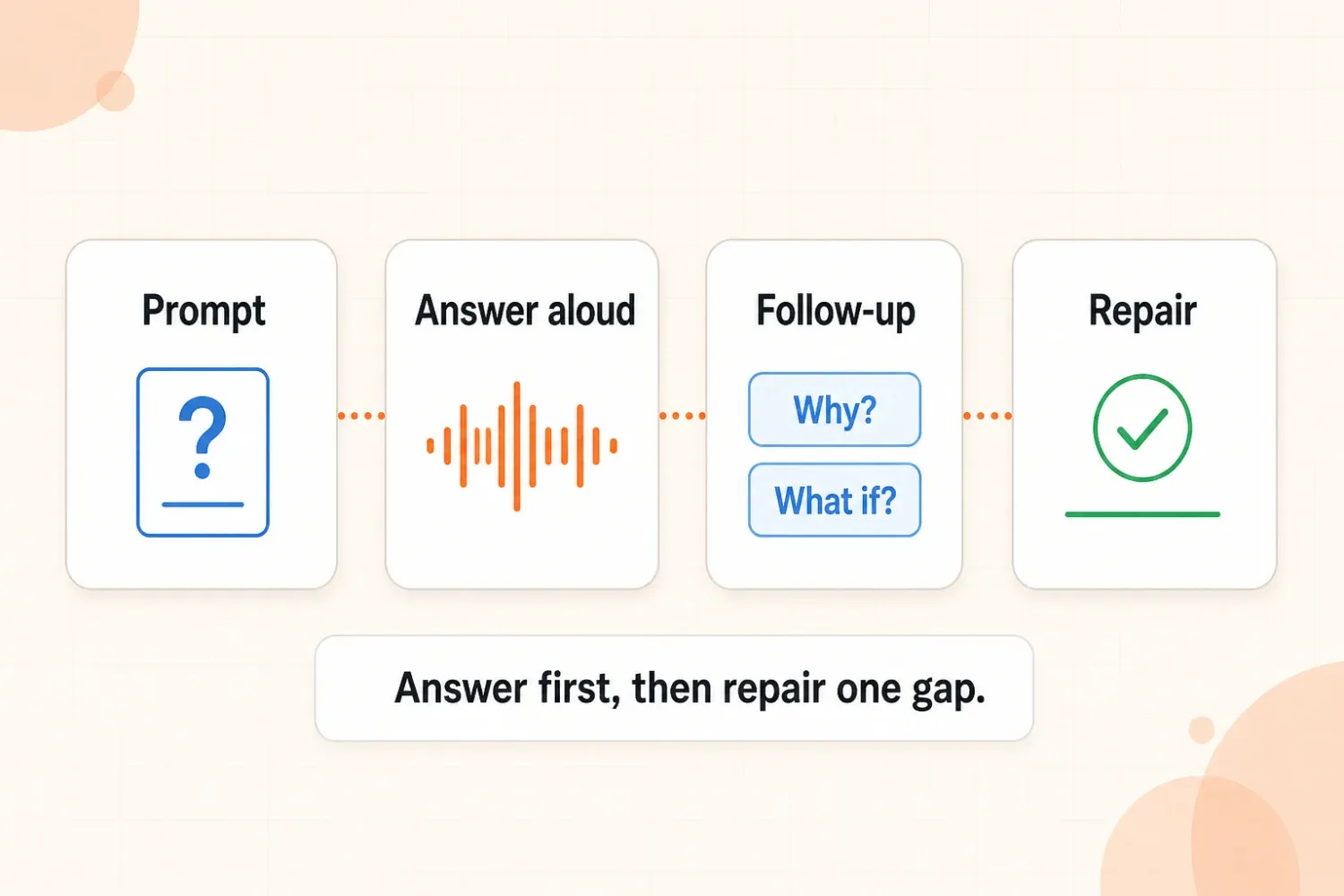
For each question, give yourself a few seconds to identify the route, then answer without opening your notes. Do not restart every time you hesitate. A short pause is part of a good oral answer because it lets you choose the relevant structure instead of filling space.
After answering, check three things:
- Accuracy: Were the facts, terms, examples, and relationships correct?
- Completeness: Did you answer every part of the question?
- Delivery: Could another person follow the answer without guessing what you meant?
Record one repair for the next attempt. It might be “define the term before using it,” “give evidence for the second claim,” or “state the conclusion instead of ending on an example.” Avoid writing “revise this topic” because it does not tell you what to do.
For a deeper approach to checking answers after practice, see this guide to reviewing a practice test after you finish it. The same principle applies to oral practice, but your evidence includes the spoken route and delivery as well as the final answer.
Train for follow-up questions
Follow-ups are where an oral exam differs most from a static written response. After every practice answer, ask one question that changes the demand:
- Why? What is the mechanism or reasoning behind your claim?
- How do you know? What evidence or source supports it?
- What if? What changes if a condition, assumption, or variable changes?
- Compared with what? Which alternative matters, and why?
- What is the limitation? Where does the explanation stop being reliable?
- What would you do next? How would you test, improve, or apply the idea?
Do not prepare only the next sentence in a memorized answer. Prepare the relationship between the idea and its reasons, evidence, conditions, and limits. That gives you several ways into the topic when the examiner asks something unexpected.
Use a simple structure for difficult answers
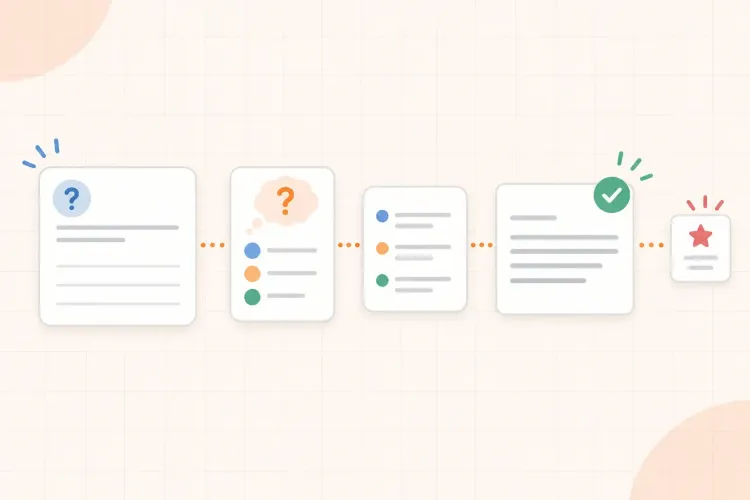
When a question feels broad, use this spoken sequence:
- Clarify the task. “You are asking about the main cause and its consequences.”
- Give the short answer. State your position or main explanation first.
- Develop it. Add the most relevant reason, example, or evidence.
- Qualify it. Mention a condition or limitation if it changes the conclusion.
- Close the loop. Tie the answer back to the question.
This is not a formula you must announce. It is a mental route that keeps you from giving scattered facts. In a technical subject, it can look like condition -> mechanism -> result -> limitation. In an essay subject, it may be claim -> evidence -> interpretation -> counterpoint. In a language exam, it may be answer -> detail -> example -> reaction.
Run realistic mock oral exams
Solo practice is useful for building recall, but another person helps recreate interruption, uncertainty, and follow-up questions. Give your partner a short list of prompts and ask them to:
- choose questions in a different order each time
- interrupt only after you have answered the first point
- ask for a reason, example, comparison, or limitation
- note where your answer became unclear or unsupported
- wait until the end before giving feedback.
Start with one topic and a few questions. Then combine topics so you have to identify the relevant material while speaking. If you cannot find a partner, record yourself answering random prompts and leave a short pause before playing the recording back. You can also use ChatGPT as a study tutor to generate follow-up questions, but answer first and treat the response as practice feedback rather than an authority.
Review the recording for decisions, not personality
Listening to yourself can make small habits feel bigger than they are. Review for decisions that affect the assessment:
- Did you answer the question in the first sentence?
- Did you use precise terms or vague substitutes?
- Did each example support the point you were making?
- Did you explain the connection between evidence and conclusion?
- Did you pause to think, or fill the pause with repeated phrases?
- Did you stop when the answer was complete?
Choose one content repair and one delivery repair. For example, your content repair might be to distinguish correlation from causation. Your delivery repair might be to state the conclusion before giving the example. Re-record the same answer once, then move to a different prompt so practice does not become a performance of one perfect script.
What to say when you get stuck
Getting stuck does not mean you must guess or go silent. Use a transparent recovery:
- Pause briefly and identify the part of the question you can answer.
- State the principle or definition you are confident about.
- Explain what follows from that principle.
- Name the uncertainty precisely if one detail is missing.
- Ask for clarification only when the question genuinely has more than one interpretation.
For example: “I am not certain about the exact date, but the important sequence is that the reform followed the economic crisis, then changed the balance between these groups.” This is more useful than inventing a precise detail. It also shows the examiner how you are reasoning.
Do not use a recovery sentence to avoid learning the material. Add the missing detail to your question bank and test it again later. You can also find your weak spots before an exam and decide whether the gap is a forgotten fact, a broken explanation, or difficulty applying the idea.
A worked example: prepare for a biology viva
Imagine that you are asked, “Why does a thicker alveolar wall reduce gas exchange?” A weak preparation method memorizes a paragraph and hopes the examiner uses the same words. A speaking outline is more flexible:
- Opening answer: A thicker wall increases the distance oxygen must cross.
- Mechanism: A longer diffusion path slows movement across the exchange surface.
- Consequence: Less oxygen reaches the blood in the same amount of time.
- Follow-up: If ventilation or the concentration gradient also changes, the rate may change for another reason.
- Limit: The exact effect depends on what else is held constant.
Now ask, “How would you know that gas exchange had become less efficient?” You might refer to oxygen concentration, diffusion rate, or an experimental comparison. The point is not to memorize one biology answer. It is to practice moving from claim to mechanism, evidence, and condition.
A practical preparation cycle
Repeat this cycle for each major topic:
- Choose a question from the assessment criteria or course material.
- Answer it aloud with the source closed.
- Check accuracy, completeness, and delivery.
- Write one content repair and one speaking repair.
- Ask a follow-up question that changes the demand.
- Revisit the topic later with a different prompt.
If your source material is spread across notes, slides, and PDFs, turn the most important points into spoken prompts. Keep the source beside you when checking, but do the oral attempt before looking back.
What to do on the day of the exam
Use the final review to refresh answer routes and known gaps, not to write new scripts. If you have preparation time, turn the question into three or four keywords and decide what your first sentence will answer. Do not try to draft the whole response.
During the conversation, listen to the complete question before starting. Pause briefly when you need to choose a route. If the wording is genuinely unclear, ask the examiner to rephrase it. If you do not know one detail, say what you do know and show how it connects to the question rather than filling the silence with a guess.
Keep an eye on the scope of your answer. State the main point, give the support that matters, respond to the follow-up, and stop when the question has been answered. A concise answer that is easy to follow gives the examiner a clear basis for assessing your knowledge.
Common oral-exam mistakes
Memorizing a complete script
Scripts can help with an opening or presentation, but they are fragile under follow-up questions. Keep keywords and relationships instead of full paragraphs.
Practicing only in your head
Silent recognition does not train speaking speed, answer structure, or recovery. Say the answer aloud, even when you are studying alone.
Writing answers that are too broad
Broad prompts hide the point where your understanding breaks. Turn them into questions about a definition, mechanism, comparison, example, or limitation.
Treating delivery as decoration
Clear pacing and signposting help the examiner follow your reasoning. They do not replace accurate knowledge, but they make that knowledge easier to assess.
Avoiding follow-up questions
If you practice only predictable prompts, a small change in wording can feel like a new topic. Add why, how do you know, what if, and limitation questions to every topic.
Speaking for too long
More detail is not automatically a better answer. Give the main point first, develop the relevant support, then stop or invite the next question.
Final oral-exam checklist
Before the exam, check that you can:
- describe the format, timing, permitted material, and marking criteria
- answer each major topic using keywords rather than a memorized paragraph
- explain, compare, apply, and defend ideas aloud
- respond to why, evidence, what-if, comparison, and limitation follow-ups
- pause, clarify, and recover without inventing details
- complete a mock conversation with questions in an unfamiliar order
- identify one content repair and one delivery repair after practice
- give a concise opening answer and a clear conclusion.
An oral exam rewards more than stored information. Learn the material, close the notes, answer aloud, follow the reasoning when the question changes, and use each difficult moment to choose the next question you practice.