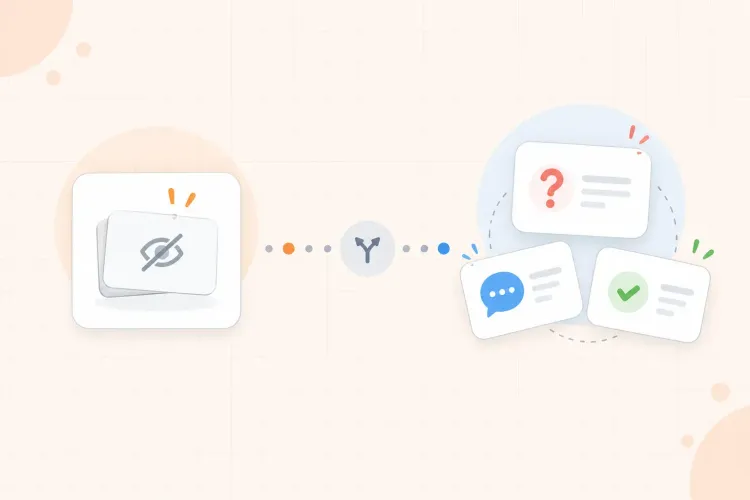

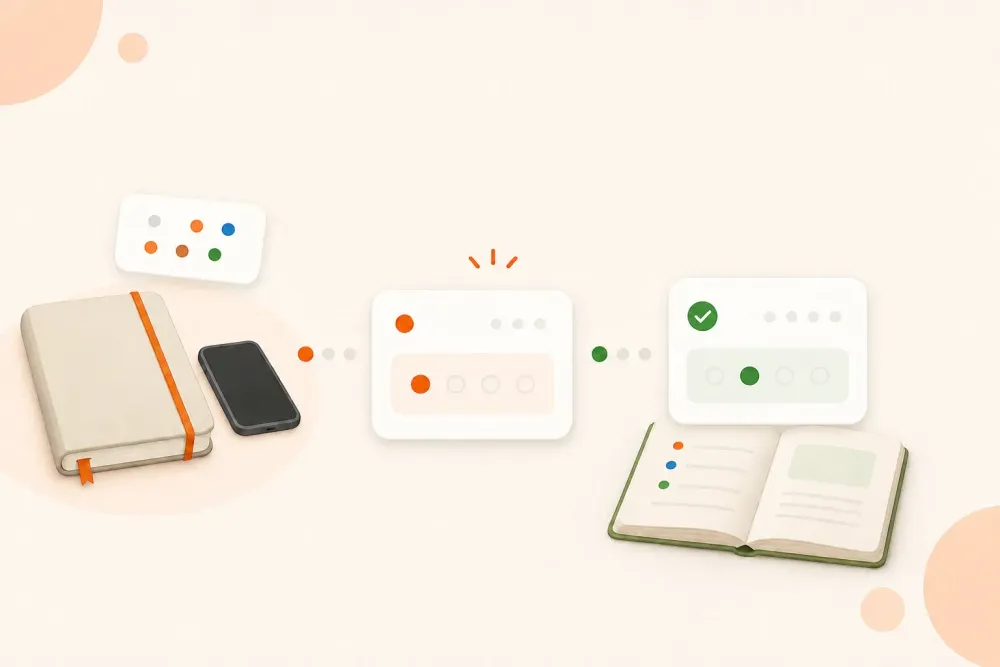
You do not need to feel motivated before you start studying. You need a first action that is small enough to begin and specific enough to finish. Replace "study biology" with "answer three questions about the electron transport chain," put the distracting tab away, and begin with the source open.
Procrastination often grows when the task is vague, uncomfortable, or difficult to judge. A practical fix is to reduce the gap between deciding to study and doing one visible piece of work. This guide shows you how to make that first step concrete, protect it from distraction, and turn it into real practice instead of another planning session.
How to stop procrastinating when you need to study
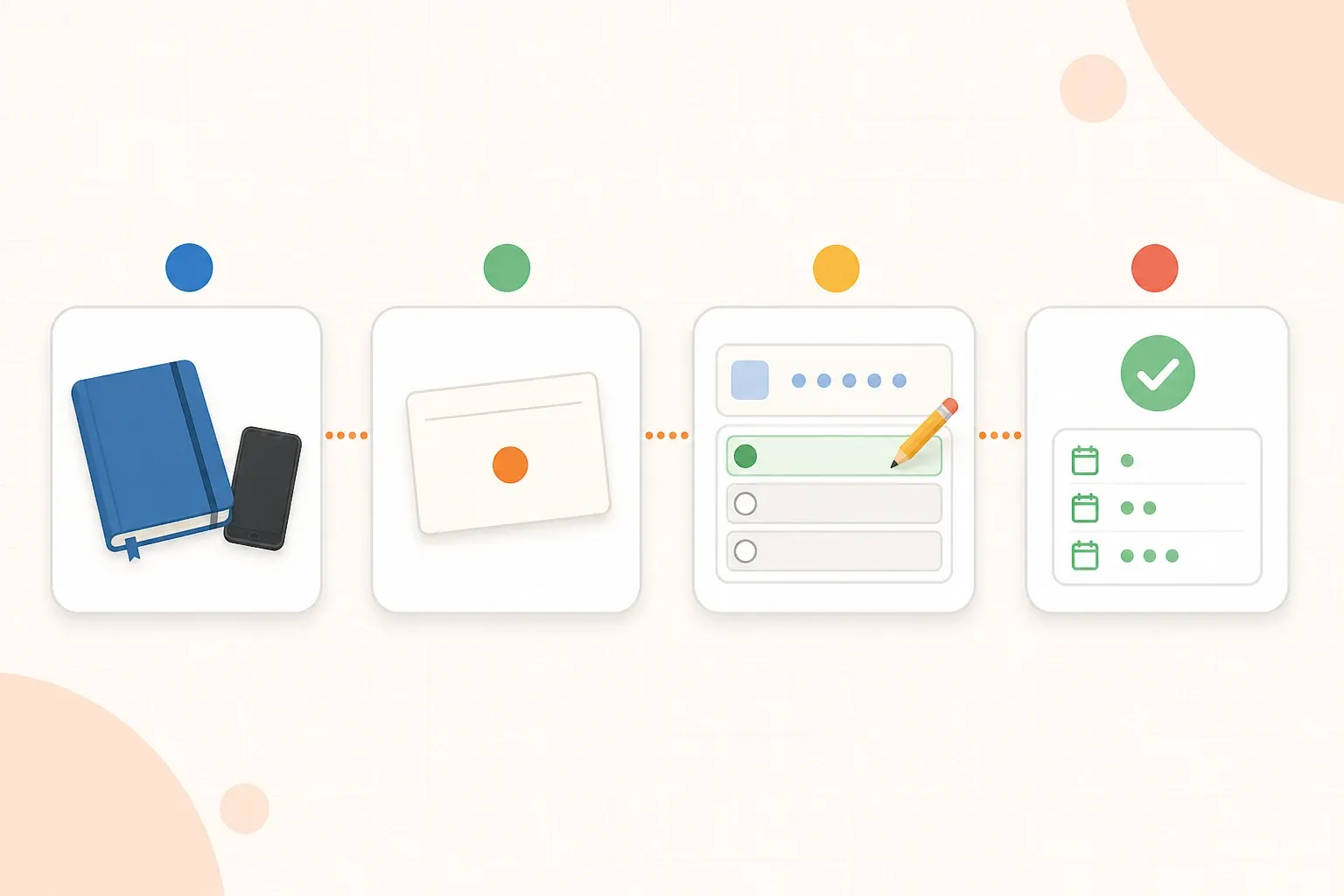
Use this start loop:
- Name the exact topic or source you will use.
- Define one result that will make the session concrete.
- Remove one obvious source of friction.
- Work on the smallest meaningful question or task.
- Decide whether to stop or continue after you have evidence from that first attempt.
The loop matters because it replaces the need to feel motivated with a decision you can execute. You are not promising to finish the whole chapter. You are creating a first test of what you know and what needs attention.
Why studying is so easy to postpone
"Study" is not one action. It might mean finding notes, choosing a chapter, rereading slides, making flashcards, solving problems, or checking an answer. When the next action is unclear, the work feels larger than it is.
Some study tasks are also aversive because they expose uncertainty. Opening a practice test may show that you forgot more than you expected. Starting an essay may force you to choose an argument. Rereading feels safer because recognition can feel like progress without requiring an answer.
This does not mean every delay is a discipline problem. Research on academic procrastination points to task-level factors such as ambiguity, aversion, limited feedback about progress, and an environment full of competing cues. The useful question is not "Why is this so hard to start?" but "What is making the next action hard to see or hard to attempt?" A research overview of study environments and academic procrastination explains why changing the task and its surroundings can matter.
Turn "study" into a visible first action
Write the first action as something another person could watch you do. Compare the difference:
| Vague intention | Visible first action |
|---|---|
| Study chemistry | Open the acid-base notes and answer one question about pH |
| Revise history | Write three causes of the event without looking back |
| Work on the essay | Open the brief and write one possible claim |
| Catch up on lectures | Choose one missed lecture and list the two ideas you cannot explain |
The visible version has a clear starting point and a natural stopping point. It also gives you feedback. After the action, you know whether you need a second question, a source check, or a different task.
Avoid defining the first step as preparation that can expand forever. Organizing folders, choosing the perfect playlist, and rewriting your to-do list may be useful later, but they should not replace the first attempt.
Make the first task small but meaningful
Small does not mean pointless. The first task should be short enough to reduce resistance and substantial enough to reveal a gap.
Good starting tasks include:
- answer two questions from memory;
- solve the first step of one problem;
- explain one diagram without looking at the labels;
- write a five-sentence outline from the assignment brief;
- mark the exact part of a lecture note that you cannot explain.
Do not start with "read until the work feels easy." Reading has no built-in finish line, so it can turn into passive time. Define the first block by a result you can inspect, such as an answer, a worked step, a short explanation, or a marked gap.
Start with a question instead of rereading
When you are delaying because a topic feels difficult, begin with retrieval. Close the source and write what you know about one narrow idea. Then reopen the notes to check the attempt.
This gives rereading a purpose. You are looking for the missing definition, link, condition, or step instead of moving your eyes across every page. For a larger source, you can turn one short practice test into a focused review list, then return to the source only where the answers show a gap.
The first attempt does not need to be good. Its job is to make the next review decision easier. A wrong answer that identifies the missing link is more useful than ten minutes of rereading that never tests whether you can retrieve the link from memory.
Remove friction before you sit down
Choose one friction-reducing action before the session begins:
- put your phone in another room or out of reach;
- open the exact document and page you need;
- close unrelated tabs;
- place paper beside the source for an answer attempt;
- keep only the calculator, formula sheet, or reference you are allowed to use;
- decide the first question before you sit down.
Do not turn this into a room-reset ritual. The goal is to make the intended action easier than the most obvious alternative. If preparing the desk takes longer than answering the first question, preparation has become another form of delay.
Use an if-then plan for recurring study
For a task you keep postponing, connect it to a situation that already happens. Use this structure:
If you finish dinner and put your dishes away, then open the biology notes and answer one question before checking your phone.
The plan should name a cue, a location, and a first action. "If there is time tonight, study" is too easy to renegotiate. "After dinner at the desk, answer one question from the open lecture notes" leaves less room for renegotiation.
An if-then plan distinguishes a general goal from a specific response to a cue. It may make the next action easier to define, but it is not a guarantee that procrastination will disappear. This study of goal-related actions and academic procrastination tested SMART goals and implementation intentions, and its findings are a useful reminder that a plan still needs a concrete action and a workable environment.
When the subject feels overwhelming
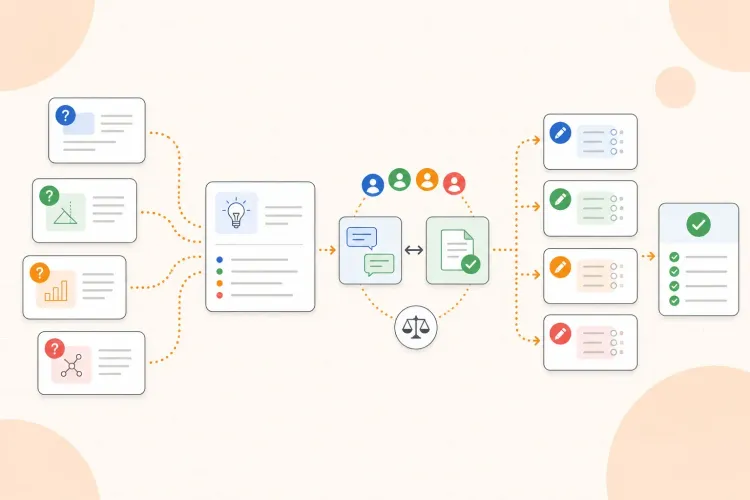
Overwhelm is often a scope problem. You are holding the whole exam, chapter, or unfinished assignment in your head at once. Reduce the scope until you can name one question that would move the work forward.
Try this sequence:
- Write down everything competing for your attention.
- Circle the one task with the most immediate meaningful consequence.
- Choose one source or assignment section, not the whole course.
- Define the smallest answer or draft that would give you something to assess.
- Start before reorganizing the rest of the list.
If the list is genuinely too large for the time available, you need prioritization rather than more willpower. Once you know which topics and actions compete for that time, you can build a timetable around your actual available time. Planning should reduce the decision load, not become a way to avoid the first task.
If you have already lost most of the day
Do not turn a late start into an all-or-nothing decision. Choose one high-priority topic, open only the materials you need, and complete one closed-book question before deciding whether to continue. A useful evening session might produce three checked answers and a short list of gaps; it does not need to recreate the study day you planned in the morning.
Protect the next session as well. Stop after writing down the next question or repair action, then leave the source open or ready for tomorrow. This prevents the familiar cycle of delaying, attempting an unrealistic late-night recovery, and postponing again because the task now feels even heavier.
When the real problem is confusion
Sometimes you are not avoiding study; you are avoiding a task whose first step you do not understand. This is common after a missed lecture, an incomplete set of notes, or an assignment with an unclear prompt.
Name the missing information directly:
- "The question is unclear."
- "The definition is familiar, but the connection to the example is missing."
- "The explanation between these two lecture points is missing."
- "The requirements for a complete answer are unclear."
Then choose a repair action: read the relevant section, ask one precise question, compare the prompt with a worked example, or mark the gap for office hours. After a missed lecture, you can recover the missing thread without rewriting every minute instead of trying to recreate the entire class at once.
A first-session script you can use today
When you are already delaying, use this sequence without expanding it into a new planning project:
- Choose one source: open the notes, problem set, lecture, or assignment brief.
- Write one question: choose something the material should help you answer.
- Attempt it closed-book: write what you know, even if the answer is incomplete.
- Check one point: return to the source and identify the first missing or incorrect step.
- Choose the next action: answer a changed question, repair the gap, or stop with a clear review note.
The first session can end once you have chosen the next action. Continuing is useful when you have momentum, but the purpose of the start routine is to reveal the next useful step, not to prove that you can study for an unlimited block.
How to restart after you lose focus
Do not treat an interruption as a reason to abandon the whole session. Write a restart line before switching away:
"Current focus: checking whether oxygen is the final electron acceptor. Next: explain what happens to the electron transport chain when oxygen is unavailable."
When you return, read that line and attempt the next action before opening unrelated material. A restart line preserves context, so you do not have to spend the first ten minutes figuring out what you were doing.
If you have been avoiding study for days, lower the scope of the restart rather than making a dramatic new plan. One honest attempt can show whether the obstacle is confusion, fatigue, missing material, or a task that needs to be broken down further.
What not to do when you are procrastinating
Avoid these substitutes for starting:
- making a detailed schedule before choosing the first question;
- collecting new study methods instead of using the material you already have;
- rereading the entire chapter to avoid seeing what you cannot recall;
- waiting for a perfect two-hour block;
- setting a timer without defining what you will produce;
- judging the session by time spent rather than by an answer, correction, or next action.
The issue is not that these actions are always useless. It is that they can create the feeling of preparation without showing that studying has begun.
The goal is to make starting repeatable
You do not stop procrastinating by winning an argument with yourself every evening. You make the first action clearer, smaller, and easier to begin. Then you use the first attempt to choose the next useful step.
Name the source, write one question, remove one distraction, attempt an answer, and check what it tells you. A study session does not need to begin with confidence. It needs to begin with an action you can see and evaluate.