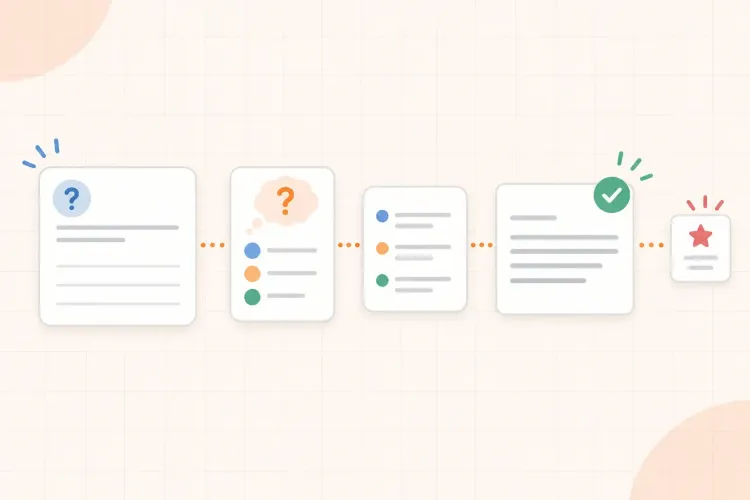

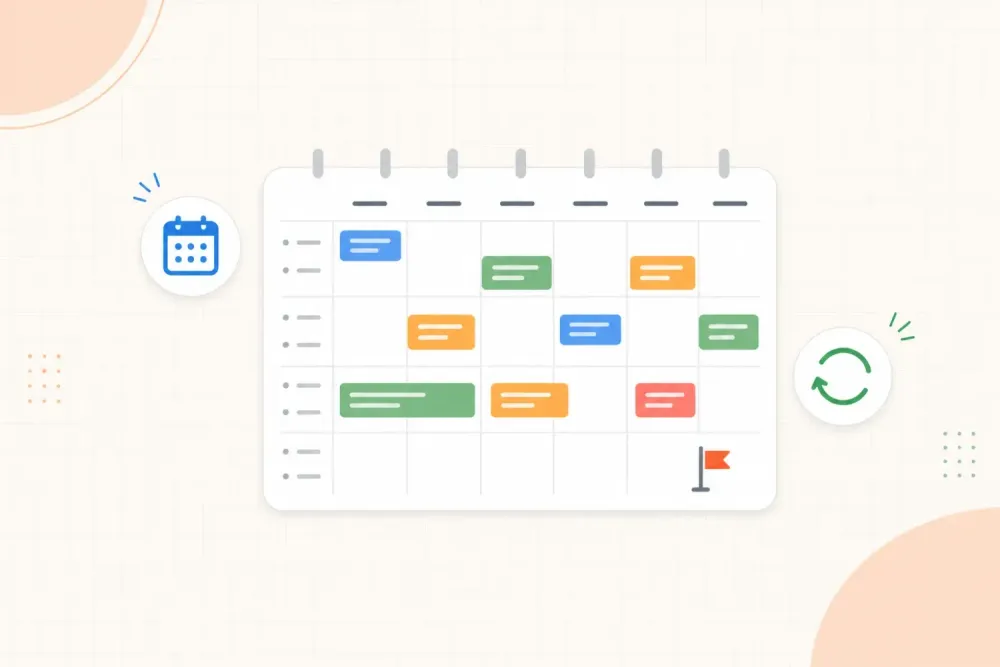
A revision timetable looks useful until the first week exposes its assumptions. You schedule six hours on a day when you have classes, give every chapter the same amount of time, and then fall behind as soon as one difficult topic takes longer than expected. The problem is usually not a lack of motivation. It is a plan built from ideal time rather than real time.
To build a revision timetable that actually works, start with your available hours, place the fixed commitments and exam dates, divide the material into manageable blocks, and give each block a clear study action. Then use short recall checks to decide what the next version of the timetable should contain. A timetable is useful when it helps you choose the next task, not when it fills every square on a calendar.
How to build a revision timetable for exams
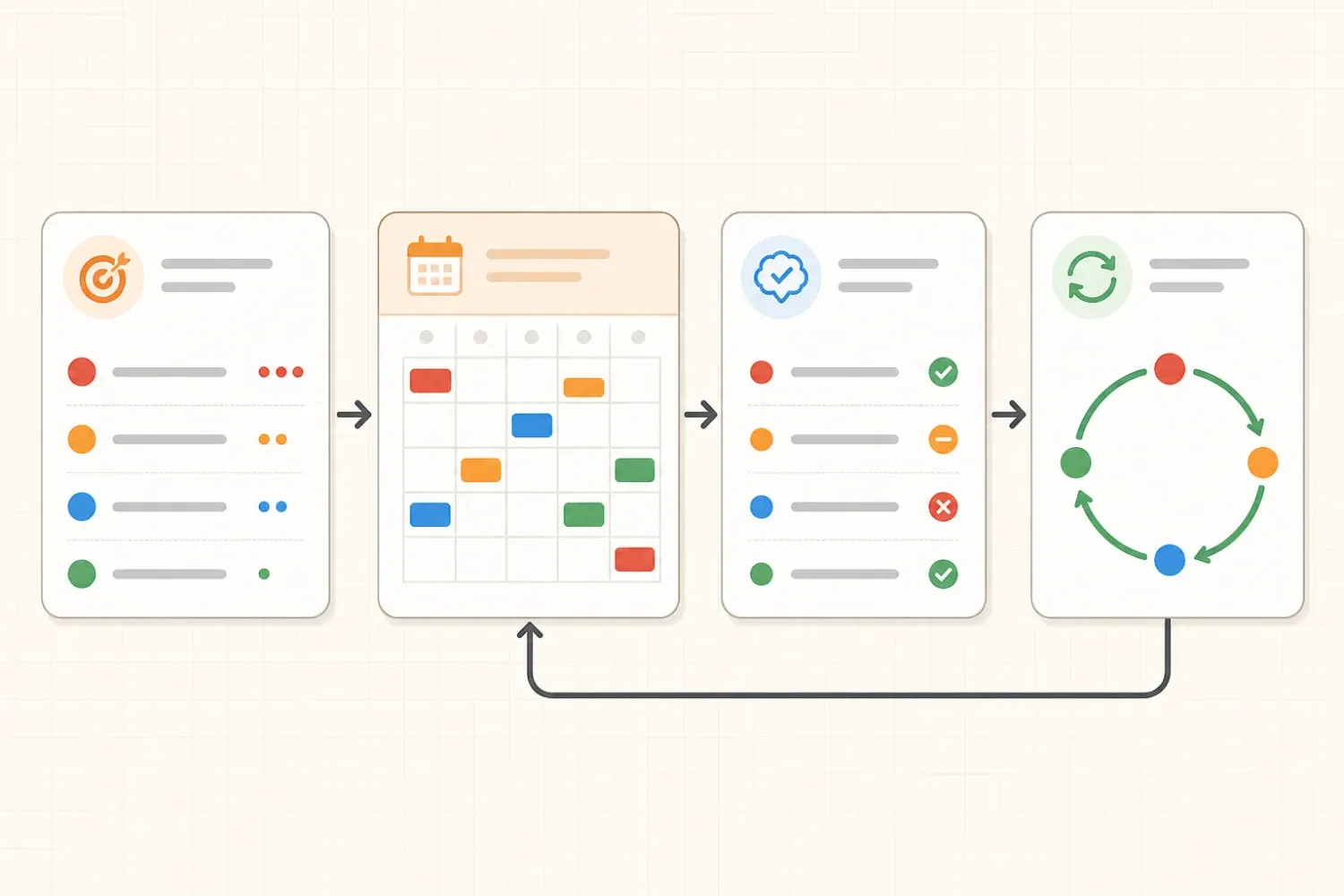
Use this sequence to build the first version of your plan. Keep it simple enough to update after a real study session.
- List the exams and fixed commitments. Write down each exam date, its format, your classes, work shifts, travel, meals, sleep, and any deadlines that cannot move. Then work backward from each exam: reserve a final light-review window, schedule mixed practice and repair before it, and fill earlier blocks with initial coverage. The time left after those commitments is your study capacity. Do not count every hour between waking up and going to bed as available study time.
- Break each subject into assessable blocks. Use lecture units, textbook sections, problem types, or past-paper topics rather than vague labels such as "biology" or "chemistry." A useful block should be small enough to finish and specific enough to test.
- Estimate effort, then add a buffer. Mark each block as light, medium, or heavy. Heavy blocks may involve a new concept, a long problem set, or a topic you have not studied yet. Leave unused space in the week for overruns, questions, and recovery.
- Assign a study action to every block. Decide whether you will make a one-page explanation, answer questions, solve problems, mark a past-paper section, or review an error log. "Study chapter 4" is a destination; "answer 10 questions on enzyme inhibition and check the missed links" is a session.
- Place review after the first attempt. Bring a topic back after you have tried to recall or apply it. The interval does not need to be perfect. The important change is that review follows an attempt instead of being postponed until the night before the exam.
Start with available time, not wishful time
Before assigning topics, calculate how many focused blocks you can realistically complete. Use a consistent unit, such as 45 to 60 minutes followed by a short break, when you estimate and review the plan. The exact length matters less than being honest about what one block contains.
Suppose you have five evenings with two usable hours, one Saturday with four hours, and Sunday reserved for rest and family commitments. That gives you fourteen focused hours, not an imaginary twenty or thirty. Reserve one or two of those blocks as recovery space. Your working capacity is closer to twelve hours, and that is the number your timetable should distribute.
A schedule also needs sleep, meals, breaks, and non-study responsibilities. Cornell's guidance on creating a study schedule makes the same practical point: a useful plan includes the conditions that let you study effectively, rather than treating rest as wasted space.
Turn the syllabus into blocks you can finish
A topic is ready for the timetable when you can describe what completion looks like. For a history unit, that might mean explaining three causes and comparing two interpretations. For calculus, it might mean solving a set of derivative problems without looking at worked examples. For anatomy, it might mean labeling a diagram and explaining the function of each structure.
Use a short planning table before you place anything on the calendar:
| Subject block | Size | Current evidence | First action | Later review |
|---|---|---|---|---|
| Cell respiration | Heavy | Can name stages, cannot explain links | Draw the pathway, then answer 8 questions | Re-test in two days |
| Enzyme inhibition | Medium | Definitions are familiar | Compare cases from memory | Mark missed distinctions |
| Genetics vocabulary | Light | Most terms stable | Short recall set | Revisit at the weekend |
The "current evidence" column stops the timetable from being based only on how familiar a topic feels. If you need a fuller process for identifying what is weak, use this guide to diagnose weak topics before an exam; here, the goal is simply to give each block a sensible starting size and action. When two blocks compete for the same opening, prioritize the exam that comes sooner, the topic that unlocks other topics, and the gap you can repair with a focused session. That is more useful than giving every subject the same number of boxes.
Give each block a result, not just a subject
A timetable becomes easier to follow when every block ends with something you can inspect. Use actions such as:
- Explain a process from a blank page, then check the source.
- Answer a short question set without notes.
- Solve representative problems and mark the step where the reasoning failed.
- Compare two similar concepts in a small table.
- Review an error log and retry the questions you previously missed.
Avoid filling the calendar with passive labels such as "read notes" or "revise chapter 6." Reading may be part of a block, but it should lead to an output: a question set, a worked example, a diagram from memory, or a short explanation you can check.
Build a timetable that can move
Once the blocks are ranked, distribute three types of work across the week so the plan does not become a list of new chapters:
- New coverage: learn or organize a topic you have not yet handled.
- Retrieval and application: answer questions or solve problems with the source closed.
- Repair and review: revisit a specific mistake, unclear link, or forgotten condition.
The point is simply to give a topic a second encounter after you have worked with it. Cornell's five-day study plan uses a similar separation between preparation and review, and recommends switching between material instead of putting all preparation into one long session.
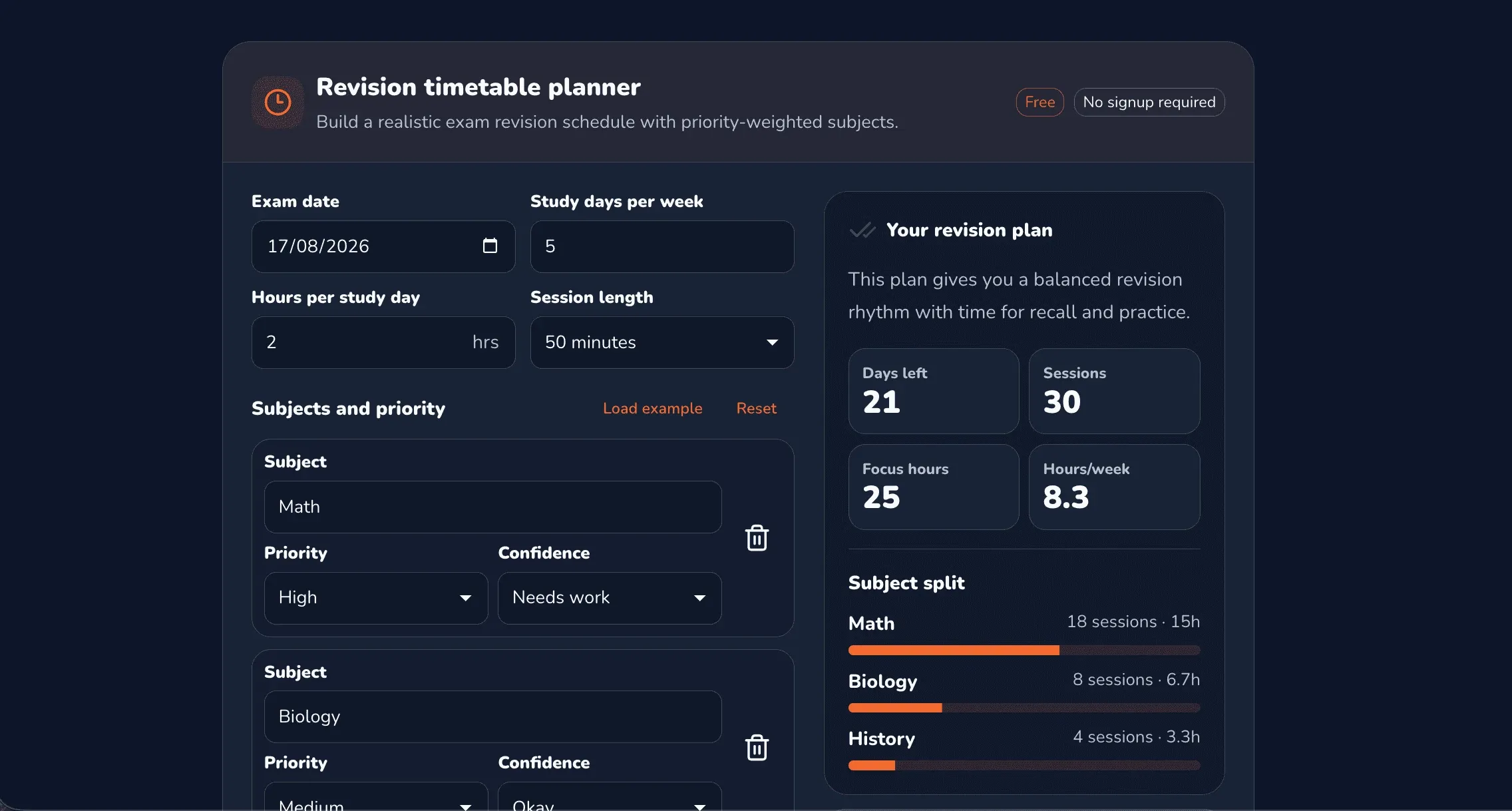
If you want to turn this first plan into a working calendar, you can build a revision timetable around your available study time. Start with the exam date, study days, hours per day, session length, and subjects that need attention. The resulting split gives you a realistic starting point, but it does not replace the decisions in this article: you still need to choose what each block should produce, where the weak topics belong, and which sessions can move when the week changes.
Example: a realistic seven-day plan
Imagine that Maya has a biology exam in seven days. She has two hours after class on Monday, Wednesday, and Thursday; three hours on Tuesday; four hours on Saturday; and no reliable study time on Friday. She needs to cover cell respiration, enzymes, genetics, and two past-paper sections.
Use this as a revision timetable template: one row per day, one line for each study block, and a result you can check before moving on. Instead of assigning one chapter per day, she uses blocks with outputs:
| Day | Blocks | Output |
|---|---|---|
| Monday | Cell respiration coverage; short recall | Pathway sketch and eight answered questions |
| Tuesday | Enzyme comparison; genetics vocabulary; review cell respiration | Comparison table, recall set, corrected pathway |
| Wednesday | Genetics application; review enzymes | Problems marked by error type |
| Thursday | Past-paper section; repair one weak link | Marked answers and a short repair list |
| Friday | No fixed study block | Protected time; move unfinished work only if needed |
| Saturday | Full mixed practice; corrections; final light review | Prioritized retry set and exam checklist |
| Sunday | Short recall of top gaps | No new heavy material |
The plan works because each day has a manageable next action, returns to earlier material, and leaves room for changes. If the enzyme comparison takes twice as long as expected, Maya moves a lower-priority vocabulary block into the unused Saturday space rather than declaring the whole plan a failure.
Adjust the timetable from evidence
A timetable should change when the evidence changes. At the end of each block, record one of three outcomes:
- Ready: you can explain or apply the material without the source. Keep a short review block later.
- Unstable: you can recognize the idea but miss details, conditions, or steps. Keep the topic, shorten the next explanation, and test it again.
- Blocked: you cannot start the answer or the reasoning breaks immediately. Find the missing prerequisite or source explanation before scheduling more repetition.
Move blocks by priority, not by guilt. A topic that is both likely to appear and foundational for other topics deserves space before a minor detail that is already stable. When the problem is a specific gap rather than the whole subject, adjust that block instead of restarting the whole timetable.
Common revision-timetable mistakes
Planning every minute
A full calendar leaves no room for slow problems, questions, or tired days. Protect the important blocks and keep a small buffer.
Giving every topic equal time
Equal time is easy to draw but rarely matches the material. Let exam timing, topic size, and current evidence determine the balance.
Counting exposure as completion
Reading a chapter is preparation, not proof that you can use it. End the block with an explanation, question set, problem set, or corrected error.
Never moving the plan
A missed block tells you something about the estimate or the day. Move it to the next sensible opening, reduce its scope, or remove it if the topic is no longer a priority.
Saving all practice for the end
Small recall or application checks during the week show what needs to change before the final review window.
A simple weekly review
Once a week, spend ten minutes checking whether the timetable still matches reality:
- Which blocks were completed, and what evidence did they produce?
- Which estimates were too short or too ambitious?
- Which topics now need review, repair, or less attention?
- What fixed commitments or deadlines changed?
- What is the smallest useful next block for each subject?
The next version should be more accurate because it is based on completed work rather than guesses. For a broader finals plan, see how to handle finals when there is too much material. For the distinction between the action of retrieving and the timing of review, read how spaced repetition and active recall fit together.
A revision timetable does not need to predict the week perfectly. It needs to protect realistic study time, turn topics into checkable actions, and change when your answers show that the original estimate was wrong. Plan the next block, test what it produced, and let that evidence shape the block after it.