Studying alone gives you control over your pace, attention, and what you need to revisit. Studying with other students gives you explanations, alternative approaches, and a reason to prepare before you arrive. Neither option is automatically better. The useful choice depends on the task in front of you.
Use solo study when you need to learn unfamiliar material, retrieve answers without help, or repair a specific gap. Use a group when you need to explain an idea, compare reasoning, practise likely questions, or discover an assumption you did not notice on your own. In many courses, the most effective pattern is not solo versus group. It is solo first, group second, then solo again.
Should you study alone or with a study group?
Choose the setting that matches the work:
| If your immediate task is to... | Start with... | Why |
|---|---|---|
| Learn a chapter or lecture for the first time | Study alone | You can move at the right pace and pause where the explanation becomes difficult. |
| Find out what you remember without help | Study alone | Hints and familiar explanations can hide gaps in recall. |
| Explain a process or defend an answer | A small study group | Other people expose unclear steps and ask follow-up questions. |
| Compare different ways to solve a problem | A study group | You can see approaches you might not have considered. |
| Finish a focused set of practice questions | Either, with clear roles | The important part is attempting before checking, not the number of people present. |
| Stay accountable for a task you keep postponing | A reliable partner or group | A specific meeting can create a useful commitment. |
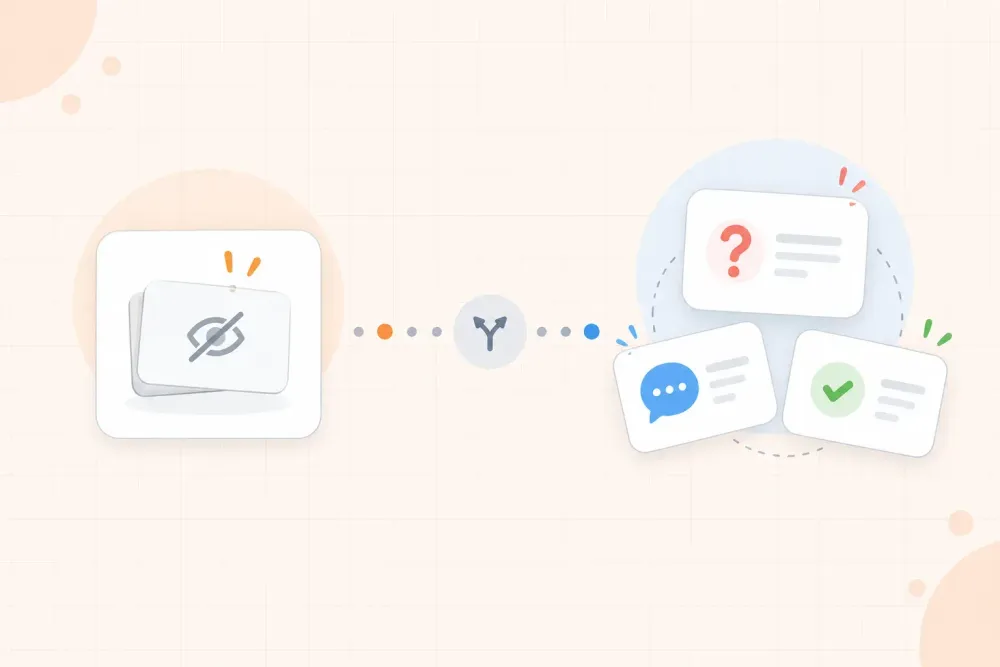
A useful first question is: do you need uninterrupted retrieval, or useful feedback? If you have not yet tried to answer, start alone. If you have an answer but cannot tell whether it is complete, bring it to someone else.
When studying alone works better
Solo study is usually the better starting point when the material is new or your understanding is uneven. You can choose a small target, close the source, and find out what you can reconstruct without waiting for the rest of a group to reach the same point.
It is especially useful for:
- First-pass learning: Read a short section, identify the main claim, and write what it means in your own words.
- Active recall: Answer questions with the notes or textbook closed so you can see what is actually available from memory.
- Repairing a narrow gap: Revisit one definition, equation, diagram, or worked example instead of discussing the entire chapter.
- Deep concentration: Work through a calculation, essay plan, or dense reading without having to match someone else's pace.
- Personal pacing: Spend ten minutes on a difficult mechanism or move quickly past a point you already understand.
If the retrieval part of solo study is new to you, this guide explains how to use active recall to remember what you study without turning the session into another round of rereading.
Solo does not have to mean passive. A productive individual session might look like this:
- Choose one bounded section from a lecture, PDF, textbook, or set of slides.
- Write three to five questions before looking for the answers.
- Close the source and answer in rough form.
- Check the source and mark the exact point you missed or oversimplified.
- Retry the weakest answer later without reopening the whole chapter.
That process gives you evidence about your understanding. Simply rereading alone does not.
When studying with other students helps
A group becomes useful when it does something that is difficult to do alone. The strongest reasons are usually explanation, comparison, and accountability, not the comforting feeling of being busy together.
Use a group when you need to:
- explain a concept clearly enough for someone else to follow it
- compare two solution methods and identify when each one applies
- test whether an answer includes the necessary steps or conditions
- hear a different interpretation of a reading, case, diagram, or question
- practise responding aloud before an oral exam or presentation
- keep a specific study commitment that you have struggled to maintain alone
The group is most helpful when everyone arrives with some preparation. Western University's study-group guidance similarly emphasizes preparation, contribution, and participation rather than relying on one person to carry the session. Harvard's study-group guidance also frames the meeting around questions and problems from lectures, readings, or problem sets. Ask each person to bring a question, an attempted answer, or a step they cannot justify. That gives the meeting something to examine.
Come prepared with a first attempt, not a blank page. The group can then examine your reasoning instead of spending the meeting introducing the material.
Once you have decided that a group is the right setting, use a clear study-group session structure so the meeting produces explanations, corrections, and next steps instead of shared silence.
Should you study with a partner or a larger group?
“Study with other students” can mean one reliable partner, a trio, or a room full of classmates. Those formats solve different problems:
- One partner: best for checking an explanation, quizzing each other, or practising an oral answer without much scheduling.
- A trio or small group: useful when you want several approaches to a problem or need different people to challenge the same answer.
- A larger group: worthwhile for dividing a broad review task or sharing questions, but more likely to create waiting, repetition, or uneven participation.
Start with the smallest number of people that can provide the feedback you need. A partner is often enough for a definition, calculation, or oral explanation. Add more people only when their different approaches will change the quality of the discussion. Group size should serve the task, not make the session feel more serious.
When combining both methods works best
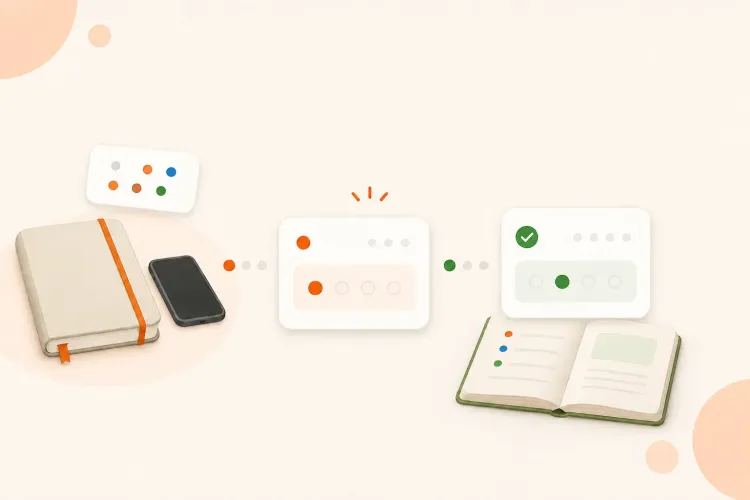
If both settings are available, use each one for the part it handles well:
- Prepare alone. Read or watch the relevant source and make a first attempt at the questions.
- Meet briefly. Bring the questions you missed, the steps you cannot justify, and one or two answers you want checked.
- Explain and compare. Take turns explaining. Ask what would change if the facts, numbers, diagram, or wording changed.
- Record the correction. Write the missing condition, step, definition, or reason in a form you can review later.
- Retry alone. Close the discussion notes and answer the question again without copying the explanation.
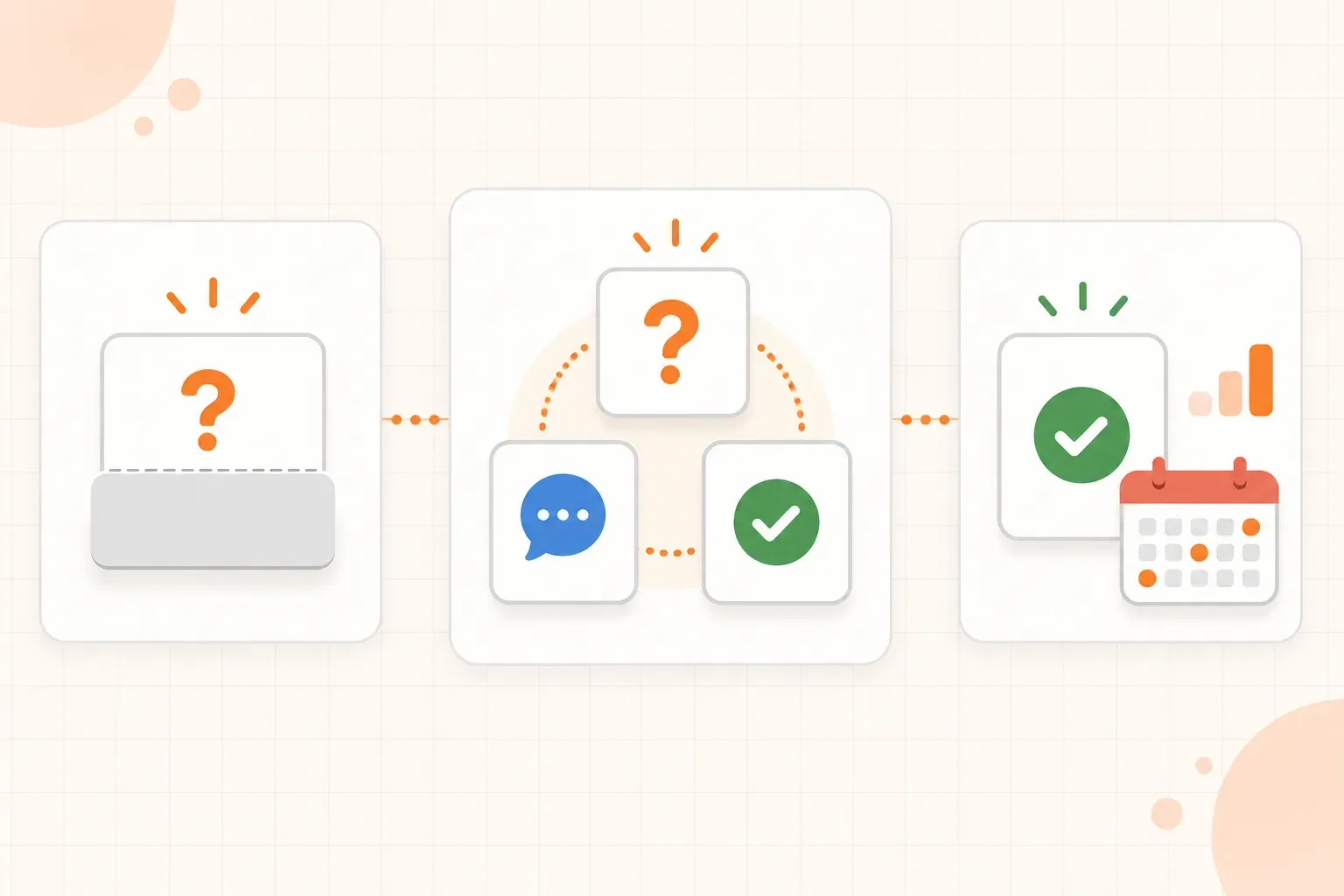
This division gives each format a distinct job. Solo work protects retrieval and concentration. Group work supplies feedback and alternative reasoning. The final solo retry shows whether the discussion changed what you can do, rather than only what sounded clear while someone else was explaining it.
Match the format to the type of subject task
The subject matters less than the action you need to perform, although some tasks naturally favour one setting.
Definitions and foundational facts
Start alone. Use closed-book questions or flashcards to check whether you can retrieve the terms and distinguish similar ideas. A group can help afterward if you keep confusing two definitions, but discussion should not replace the first recall attempt.
Calculations and problem solving
Try a problem alone before comparing methods. In a group, ask each person to explain why they chose a particular equation, assumption, or first step. A useful discussion focuses on the decision that changed the solution, not just on copying the final number.
Essays, readings, and case studies
Groups can add value earlier because another reader may notice a different claim, implication, or counterargument. Still, write your own short interpretation first. Otherwise, the most confident person's reading can become the group's answer before you have formed one.
Diagrams, processes, and applied concepts
Use solo recall to reconstruct the sequence or relationship. Then ask a partner to change one condition: remove a step, reverse a relationship, alter a variable, or introduce an exception. This turns a familiar explanation into a transfer test.
Oral exams and presentations
Practise alone while planning the structure, then ask another person to interrupt, request clarification, and point out where your explanation becomes vague. This makes the second session resemble the pressure and follow-up questions of the assessment.
How to tell whether a study group is helping
Do not judge a group by how long it meets or how comfortable it feels. Judge it by what you can do after the meeting that you could not do before it.
After a session, ask:
- Did you answer questions before hearing someone else's answer?
- Did you explain at least one idea without reading a script?
- Did the discussion reveal a specific gap or incorrect assumption?
- Did the group compare reasoning, rather than only compare final answers?
- Do you know what to retry on your own now?
If most answers are no, the meeting may be social time or shared rereading rather than study. The people involved may still be helpful, but the session needs a narrower task.
Signs that studying alone is no longer enough
Solo study can become limiting when you repeatedly:
- accept an explanation because it sounds familiar
- solve problems correctly but cannot explain why the method works
- miss the same condition or exception in several questions
- avoid speaking because you are unsure whether your reasoning is clear
- spend a long time stuck without knowing what kind of help to request
Bring one concrete problem to another student, tutor, or instructor. Do not bring only the statement "This does not make sense yet." Bring your attempt, the step where it stopped making sense, and the specific question you want answered.
Signs that the group is slowing you down
A group is probably slowing you down when:
- nobody has prepared and the first half of the meeting becomes silent reading
- one person answers every question while everyone else agrees
- the conversation jumps between chapters without finishing a task
- you leave with pages of copied notes but no questions to retry
- scheduling and chatting take more energy than the academic work
- the group's pace prevents you from fixing your own weakest topic
You can repair some of these problems by shrinking the group, setting one outcome, assigning each person a question, and ending with individual retrieval. If the same problems continue, return to solo study and use a tutor, office hour, or short check-in for the questions that remain.
Keep the group session focused
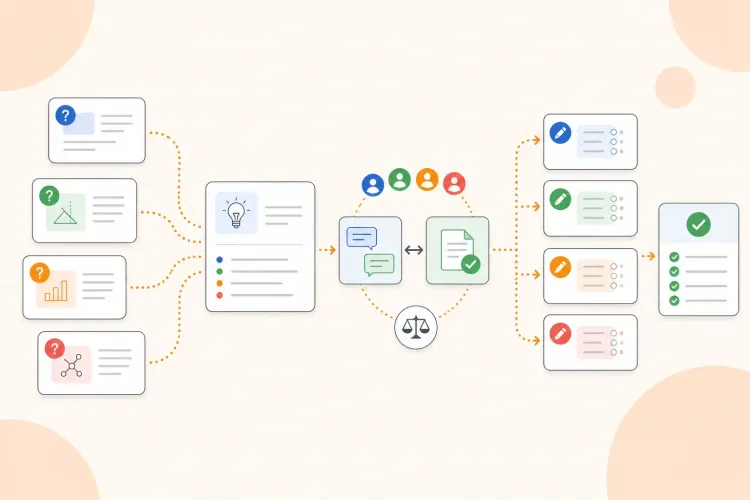
Before the meeting, make the work visible by sending each person:
- the topic or source section
- two questions they should attempt
- one uncertainty or disputed step
- the time available
During the meeting, use this order:
- Everyone answers silently first.
- One person explains an answer without reading it aloud from the source.
- Another person challenges the explanation with a "when would this change?" question.
- The group checks the source or marking guidance.
- Each person writes one correction and one question to retry alone.
For longer courses, keep the questions, corrections, and source references together. If you use Muneo, you can keep the source material and the resulting notes, quizzes, flashcards, and written practice in one study workspace instead of splitting the group's work across separate documents.
Choose based on the problem you have
Before choosing a setting, identify what is getting in the way:
- The material is not learned yet: work alone first.
- The material can be recalled but not explained: ask a partner to listen and challenge the explanation.
- The standard version works but a changed version does not: practise with a group using altered conditions.
- The work keeps getting postponed: schedule a short meeting with a clear deliverable, then complete the retrieval yourself.
- Two answers are being compared: check the source, mark scheme, or instructor's guidance before treating a vote as proof.
You do not need a permanent identity as a solo student or a group student. Choose the format that gives the next study action the attention or feedback it needs. Learn and retrieve alone, use other people to test and extend your reasoning, then return to the material yourself to see what stayed with you.
If you want to keep your sources, notes, questions, and practice in one place while moving between solo and collaborative work, you can build a study workspace around your material.