
There is no rule that says you should always study the textbook before reviewing your lecture notes, or always start with your notes. The better choice depends on what you need the source to help you do.
Lecture notes usually show what happened in class, what your instructor emphasized, and which examples or distinctions received attention. The textbook usually gives fuller explanations, background, diagrams, worked examples, and details that a lecture had to skip. In practice, start with the source that supplies what is missing: notes for course priority and the textbook for depth or clarification.
Textbook vs lecture notes: which should you study first?
Use this quick decision rule:
| Your situation | Start with | Why |
|---|---|---|
| The topic is new and you have time before class | Textbook preview | It gives you the vocabulary and structure needed to follow the lecture. |
| You just finished class and your notes are incomplete | Lecture notes | They preserve the instructor's emphasis while the session is still fresh. |
| The exam is close and you need to prioritize | Lecture notes and course objectives | They show the scope and signals that should shape your practice. |
| You know the topic is important but cannot explain it | Textbook section | It can supply the missing mechanism, example, condition, or definition. |
| The textbook and notes seem to disagree | Course materials first, then verify | The difference may be a simplification, a changed convention, or a note-taking error. |
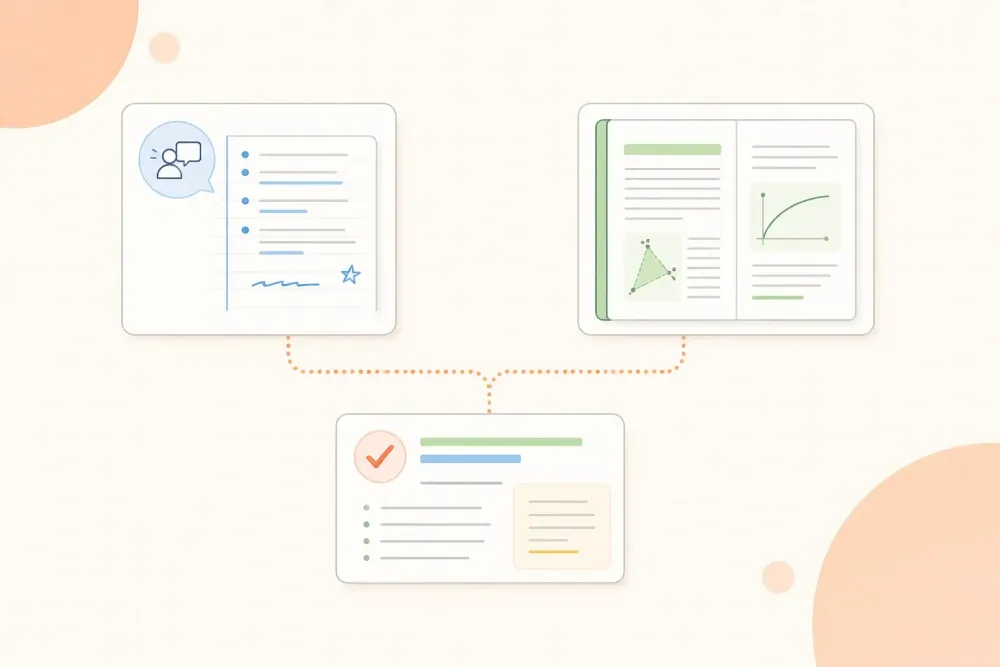
The answer is often not "choose one." It is "use each source for its strongest job, then test the combined understanding without either source open."
If none of the situations above fits neatly, use this default order:
- Before class: preview the textbook to learn the vocabulary and structure.
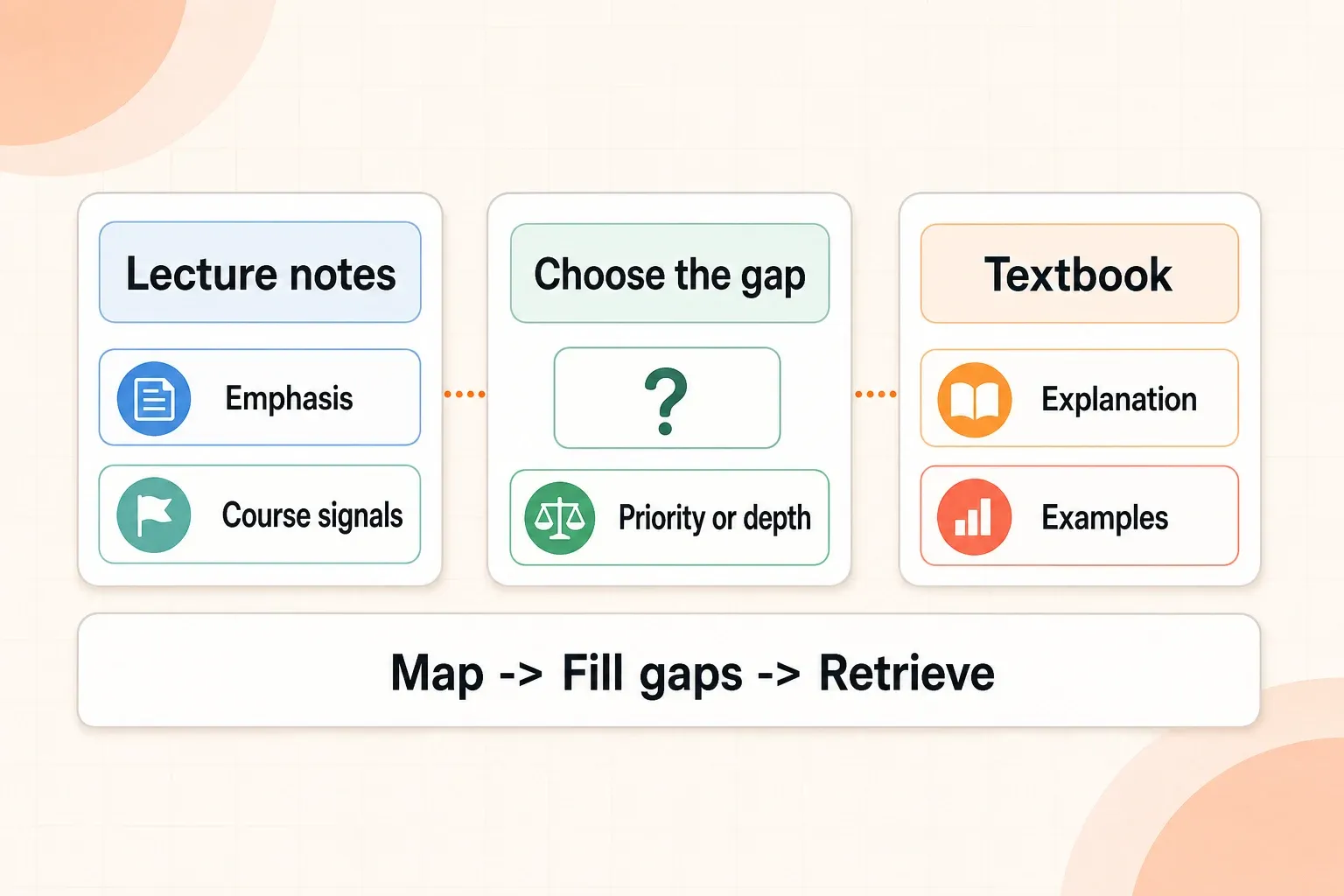
- After class: review the lecture notes to identify emphasis, examples, and gaps.
- During review: return to the textbook only for the gaps your notes expose.
- Before the exam: use the notes and course objectives to choose what to practice, then close both sources and retrieve.
This sequence gives each source a defined role without making you study either one from beginning to end by default.
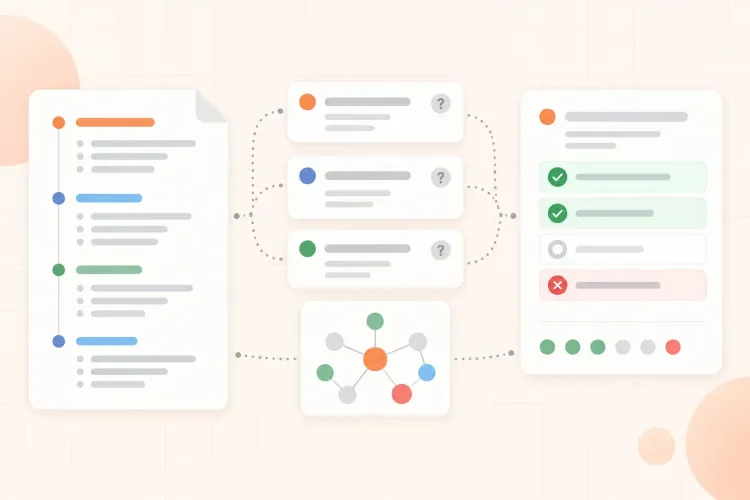
The same sequence is summarized below:
When to study the textbook first
Start with the textbook when the reading is meant to prepare you for class, the topic is unfamiliar, or the lecture moves quickly through difficult material.
You do not need to read the whole chapter in detail. Preview the title, headings, key terms, diagrams, summary, and assigned section. Write down two or three questions you want the lecture to answer. This creates a map without spending your study time making a second set of complete notes.
Textbook-first study is especially useful when:
- the topic has a sequence or mechanism that is hard to follow without background;
- the lecture assumes definitions or prerequisite ideas you do not yet know;
- you need to recognize the main terms before you can listen for important distinctions;
- the instructor expects you to arrive having completed a reading assignment.
The goal is orientation, not mastery. A short preview can make the lecture easier to follow because unfamiliar words and relationships will not be appearing for the first time in class.
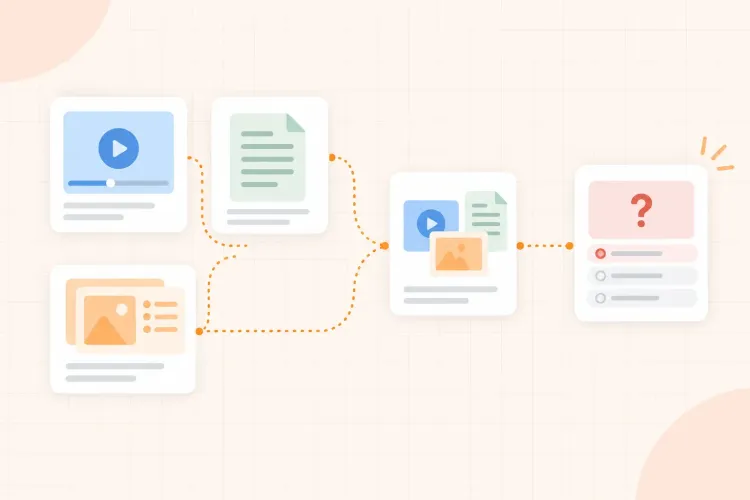
For a full chapter, use this textbook survey-and-recall workflow. For a preview, keep only the mapping and question-setting steps, then save detailed retrieval for after the lecture.
When to study lecture notes first
Start with your lecture notes when you are preparing for an assessment, trying to reconstruct what the instructor considered important, or working with a topic you already understand in broad terms.
Lecture notes can contain signals that a textbook cannot: an example developed in class, a warning about a common error, a distinction the instructor repeated, or a phrase used in the learning objectives. Those details help you decide which textbook pages deserve attention instead of treating the entire chapter as equally important.
Notes-first study is usually the better choice when:
- the exam is near and you need to narrow the scope;
- the lecture covered only selected parts of a long chapter;
- the instructor added an example, interpretation, or process not present in the textbook;
- your notes contain questions or gaps that can guide the reading.
Do not treat lecture notes as a complete replacement for the textbook. They may be compressed, missing a diagram, or shaped by what you managed to write down while listening. Use them as a priority map, then open the textbook only where it can answer a specific question.
What each source is best at
The two sources overlap, but they are not interchangeable.
Lecture notes are best for emphasis and sequence
Your notes show the order in which the class developed the topic. They may also preserve the instructor's examples, terminology, warnings, and answers to questions. That makes them useful for deciding what to practice and what the course is likely to ask you to explain.
Textbooks are best for depth and repair
Textbooks are useful when you need a complete definition, a missing step, a clearer diagram, a worked example, or a second explanation. They can also show exceptions and connections that were not covered during the lecture.
That sequence is also consistent with Harvard's guidance on reading before and after class: previewing assigned material can make the lecture easier to follow, while post-class review can fill in details and address gaps. The point is not to follow one order mechanically, but to let the next source solve the problem the first source exposed.
A three-pass workflow for using both sources
Use the order that fits your course, but keep each source's job separate.
Pass one: build the course map
Start with the source that gives you the clearest map. Before class, that may be the textbook chapter's headings and summary. After class, it may be the lecture notes and the instructor's examples. When possible, do this mapping the same day as the lecture, while the examples and emphasis are still easy to place in context.
Write a short list of:
- the main concepts or processes;
- what the instructor emphasized;
- questions or gaps that need another source;
- the kind of answer an assessment may require.
This list is more useful than copying both sources into one long document.
Pass two: use the other source to fill gaps
Now switch sources with a specific question. If the notes say "competitive inhibition" but do not explain the mechanism, read the textbook section for that mechanism. If the textbook explains a process but you are unsure which part matters for the course, return to the lecture notes for emphasis and examples. Doing this soon after class makes it easier to recognize whether a detail is genuinely missing or simply written down in different words.
Add only the missing detail. Keep the source reference beside it so you can verify the wording later instead of rewriting the entire chapter or lecture.
Pass three: close both sources and retrieve
Answer your questions with the textbook and notes closed. Explain the concept, reconstruct the process, compare two cases, or solve a related problem. Then check both sources only to classify what was missing or inaccurate.
This final pass prevents a polished combined page from creating a false sense of understanding. The real test is what you can produce when neither source is visible.
How to combine notes and textbook details without rewriting both
Use a simple three-column record:
| Course signal | Textbook clarification | Practice question |
|---|---|---|
| Instructor emphasized the rate-limiting step | Textbook explains why the step controls the pathway | Why does changing this step affect the rest of the process? |
| A common confusion was mentioned in class | Textbook distinguishes the two terms | How would you tell these terms apart in a new example? |
| The lecture used a case study | Textbook gives the general principle | Which part of the case demonstrates the principle, and what would change it? |
The first column keeps the course priority visible. The second prevents missing explanations. The third turns the merged material into something you can test instead of another summary to reread.
Do not fill every cell for every page. Add a row when the second source changes your understanding, resolves a gap, or gives you a useful application. If a textbook paragraph merely repeats your notes, leave it out.
Example: deciding what to study first in biology
Imagine your biology lecture covered cellular respiration, but your notes contain only the pathway names, a partially drawn diagram, and a warning that oxygen availability matters. The textbook chapter has thirty pages, including background chemistry and several detailed side examples.
The efficient sequence is:
- Start with the lecture notes to identify the course signals: the pathway, the incomplete diagram, and the oxygen condition.
- Open the textbook only to the sections that explain the electron transport chain, the proton gradient, and what changes when oxygen is unavailable.
- Add the missing mechanism and labels beside the original lecture points, with page references.
- Close both sources and answer: What role does oxygen play, what stops when it is absent, and how could the cell temporarily continue producing energy?
- Check the answer against the notes and textbook, then create one variation of the question for later review.
Starting with the notes makes sense here because they identify the course emphasis. Starting with the textbook would have been reasonable if the topic were completely unfamiliar or the lecture had not happened yet. The decision changes with the student's immediate problem.
What to do when the sources disagree
A difference between lecture notes and a textbook does not always mean that one source is wrong. Check what kind of difference you are seeing:
- Different level of detail: the lecture simplified the explanation for the course level.
- Different example: the instructor used a local or recent case while the textbook uses a general one.
- Different notation or convention: the sources label the same idea differently.
- Note-taking error: a word, symbol, or condition may have been recorded incorrectly.
- Actual contradiction: the claim, result, or method cannot be reconciled from the available context.
Use this order when the difference matters:
- Check the lecture slides, handout, recording, or other original class material.
- Check the course objectives or assessment instructions for the level and terminology expected.
- Revisit the surrounding lecture or textbook context in case the statements answer different questions.
- Ask the instructor or teaching team which version the assessment expects if the contradiction remains.
- Record the accepted version and why you chose it instead of quietly merging both claims into one study note.
How to use lecture slides with your notes
Lecture notes and lecture slides are related but not identical. Your notes capture what you heard and chose to write down; slides may contain diagrams, definitions, prompts, or examples that you did not record.
If the class relies heavily on slides, compare your notes with the relevant deck before opening the textbook. Mark what is missing, what the instructor expanded verbally, and what appears only in visual form. Then use the textbook to explain the parts that still cannot be answered.
Once you have compared the deck with your notes, use this lecture-slide question workflow to turn the important material into exam-focused practice rather than treating the deck as a second textbook.
Common mistakes when using both sources
Avoid these habits:
- reading the entire textbook and rewriting every lecture note before deciding what matters;
- treating the textbook as automatically more important because it is longer;
- treating lecture notes as complete even when they contain gaps or unclear diagrams;
- merging both sources into a polished summary before attempting any questions;
- copying the same definition twice because the wording differs slightly;
- ignoring instructor examples, warnings, or learning objectives;
- trying to resolve a real contradiction by guessing which source sounds clearer.
If the problem is organization rather than missing content, this lecture-notes cleanup workflow can help structure the material while keeping the original source available. Verify any generated structure against the lecture and textbook before using it for review.
The simplest rule to remember
Use lecture notes to decide what deserves attention. Use the textbook to understand what the notes leave unclear. Then close both sources and test whether you can explain the result.
The best starting source is the one that answers your current question fastest without making you copy more material. Preview the textbook when you need orientation, start with notes when you need course priority, switch sources to repair gaps, and finish with retrieval so the combined material becomes usable knowledge.